

Every project eventually reaches due diligence. Some move through it in a matter of weeks. Others spend months answering follow-up questions, updating documents, and re-explaining assumptions that should have been clear the first time. The difference usually isn't the quality of the underlying project. It's preparation. The strongest projects aren't just well documented, they're built for institutional scrutiny before that scrutiny ever begins.
The First Buyer Isn't Your First Review
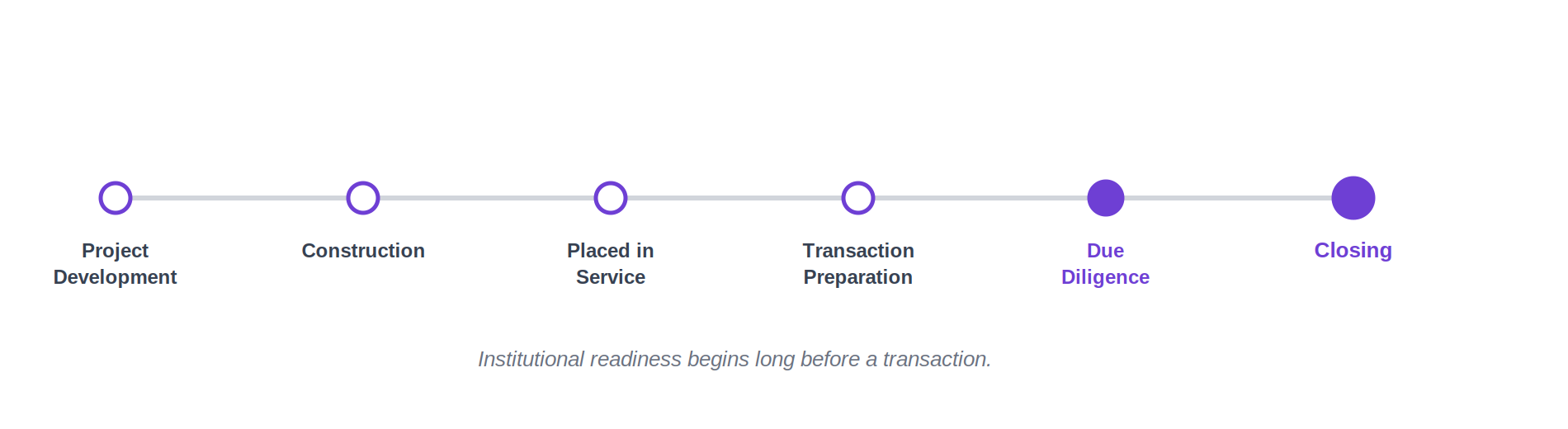
Many developers assume due diligence starts the moment a buyer signs an NDA. In practice, it starts much earlier than that. Every engineering decision, every construction contract, every financial assumption, and every compliance record made during development becomes part of the story a buyer will eventually have to evaluate. By the time a project actually reaches the market, most of that story has already been written. The only real question left is whether it's easy to follow.
Every Delay Has a Cause
Ask any transaction advisor why a deal is taking longer than expected, and the answers tend to sound the same. An engineering report needs updating. Financial statements are incomplete. A legal opinion still references outdated assumptions. Supporting evidence exists somewhere but takes days to track down. An appraisal raises a question nobody had prepped an answer for. None of these issues necessarily kill a transaction on their own. What they do is make it harder for a buyer to build confidence quickly, and most delays aren't caused by one major problem. They're caused by a dozen small uncertainties stacking up.
Institutional Buyers Expect Preparation Now, Not Just Documentation
Buyer expectations have moved. Five years ago, simply having documentation on hand was enough to get a deal moving. Today, buyers expect more than existence, they expect consistency: clear assumptions, organized information, and evidence that's easy to verify. That's not buyers demanding perfection. It's a natural response to the fact that every unanswered question extends the diligence timeline. Preparation has stopped being an administrative afterthought. It's become a strategic part of how a project gets built.
Preparation Creates Optionality, Not Just Speed
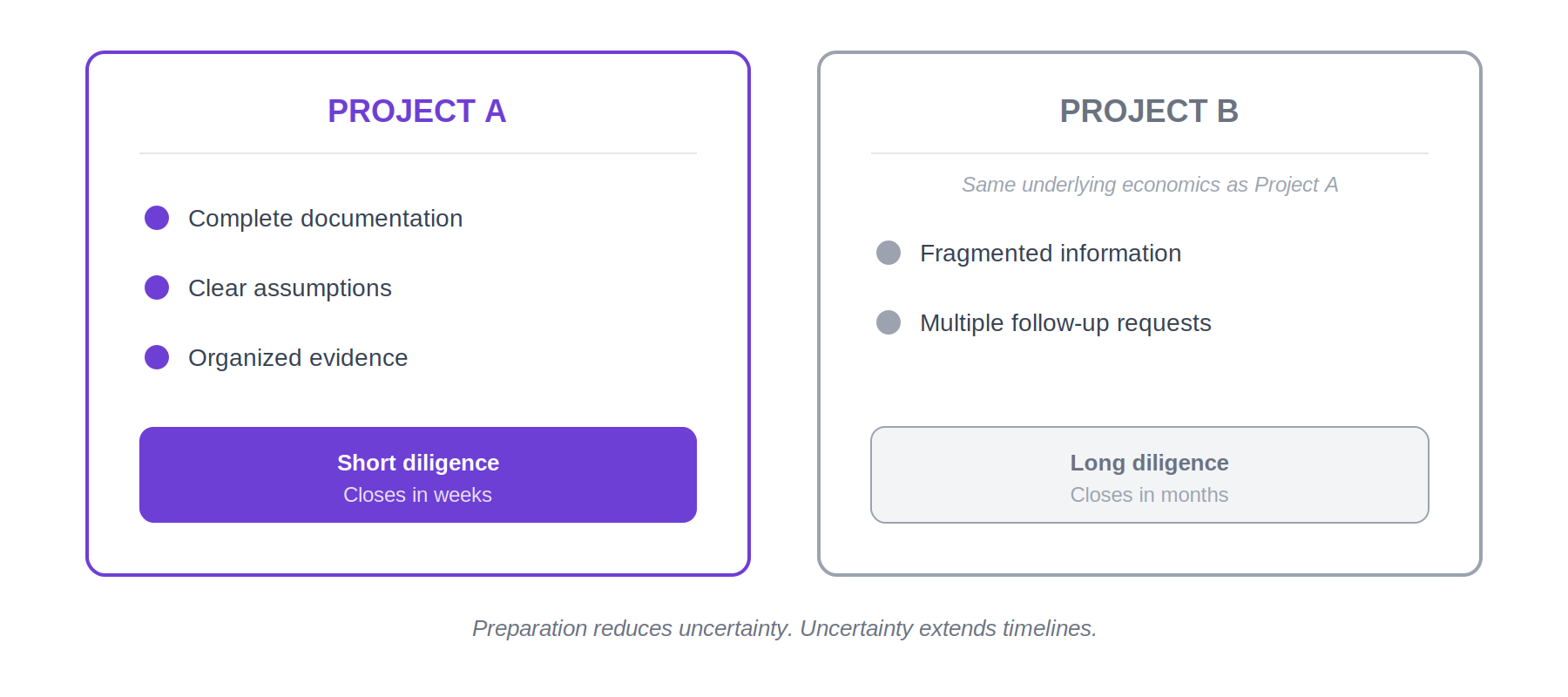
Well-prepared projects benefit in ways that aren't always obvious upfront. They attract a broader pool of buyers, since fewer buyers get discouraged by early friction. They require fewer clarification calls, which keeps deal teams focused rather than reactive. Internal investment committees receive cleaner information, which speeds up internal approval as much as external negotiation. Insurance reviews move faster. Negotiations stay focused on commercial terms instead of getting stuck resolving missing information. Preparation doesn't guarantee a transaction closes. It meaningfully increases the odds that it does, and that difference matters more than it sounds.
Project Readiness Is Becoming an Asset in Its Own Right
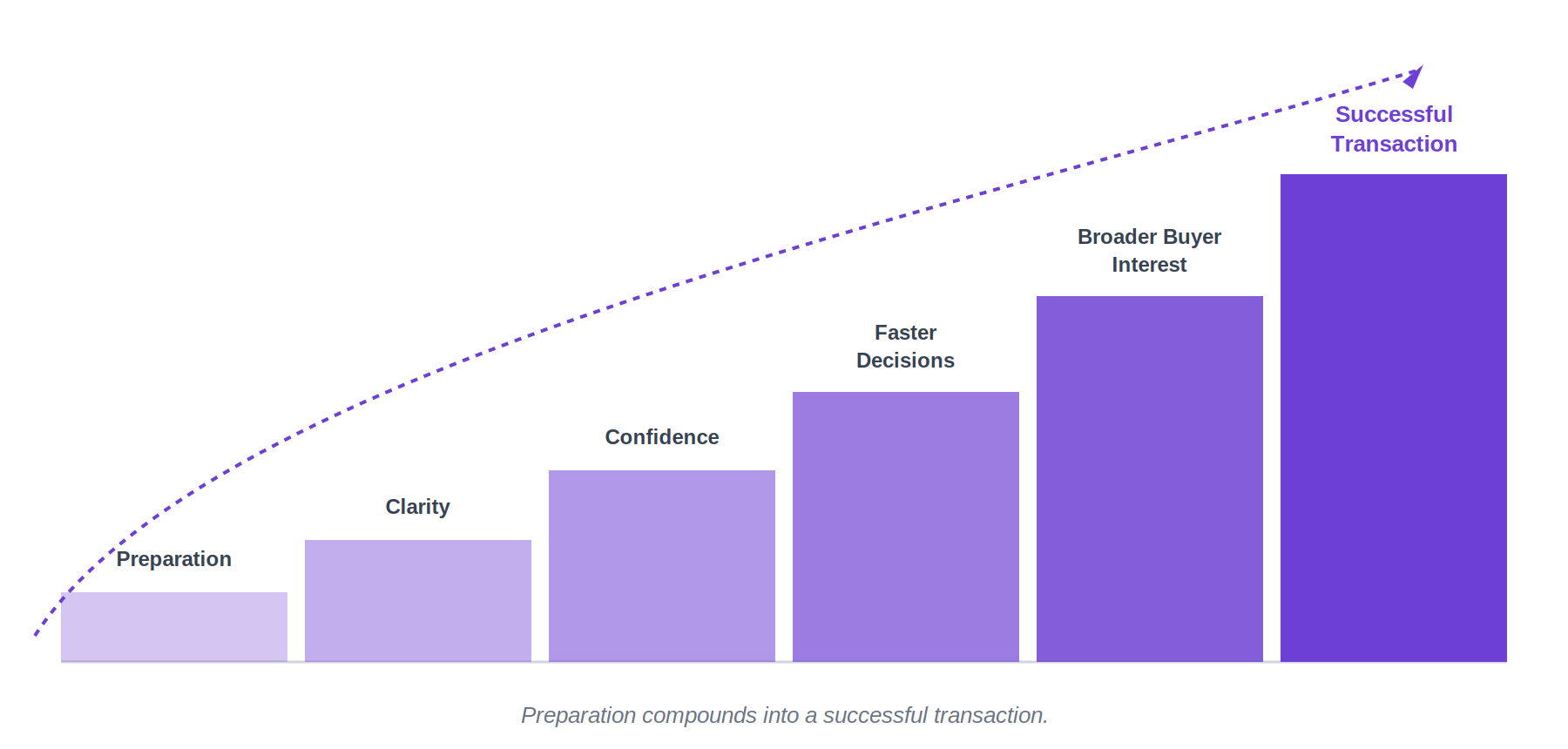
Developers have historically competed on development expertise, who could permit fastest, build cheapest, or interconnect soonest. Increasingly, they'll also compete on transaction readiness. Two projects with identical economics can receive very different market responses simply because one is easier for a buyer to evaluate quickly. Institutional markets reward clarity. Preparation is what creates that clarity, clarity is what builds confidence, and confidence is what ultimately attracts capital.
Looking Ahead
As transferable tax credits continue to mature as an asset class, project preparation will shift from being a checklist item to a genuine strategic discipline. The strongest projects won't just meet regulatory requirements; they'll actively anticipate what institutional buyers are going to ask before they ask it. That's a meaningful distinction, and it separates projects that merely qualify from projects that are genuinely easy to finance.
The Vericap Perspective
The industry has generally treated readiness as something that happens shortly before a transaction begins. We think readiness starts much earlier than that. Projects are easier to finance when they're easier to understand, and preparation was never really about producing more documents; it's about reducing the uncertainty a buyer would otherwise have to resolve on their own. Every unanswered question carries a cost. Every question answered in advance builds confidence before a buyer even asks. The projects that internalize this earliest will increasingly stand apart from the rest of the market.
The best projects don't wait for questions. They prepare for them.
So Far, on Vericap Insider
- Issue 005 - The Best Buyers Don't Buy Tax Credits
Price starts the conversation in a tax credit transaction. - Issue 004 - AI Isn't Replacing Due Diligence
AI is removing repetitive tasks that prevent experts from doing their best work. - Issue 003 - The Data Room Was Never the Point
More paperwork doesn't win a transferable tax credit deal; understanding does. - Issue 002 - Inside a $50 Million Tax Credit Transaction: What Happens Between the NDA and the Closing Table
Pricing starts the conversation. Confidence closes it. - Issue 001 - Why the Transferable Tax Credit Market's Biggest Problem is No Longer Finding Buyers
The next challenge isn't finding buyers. It's building trust.