

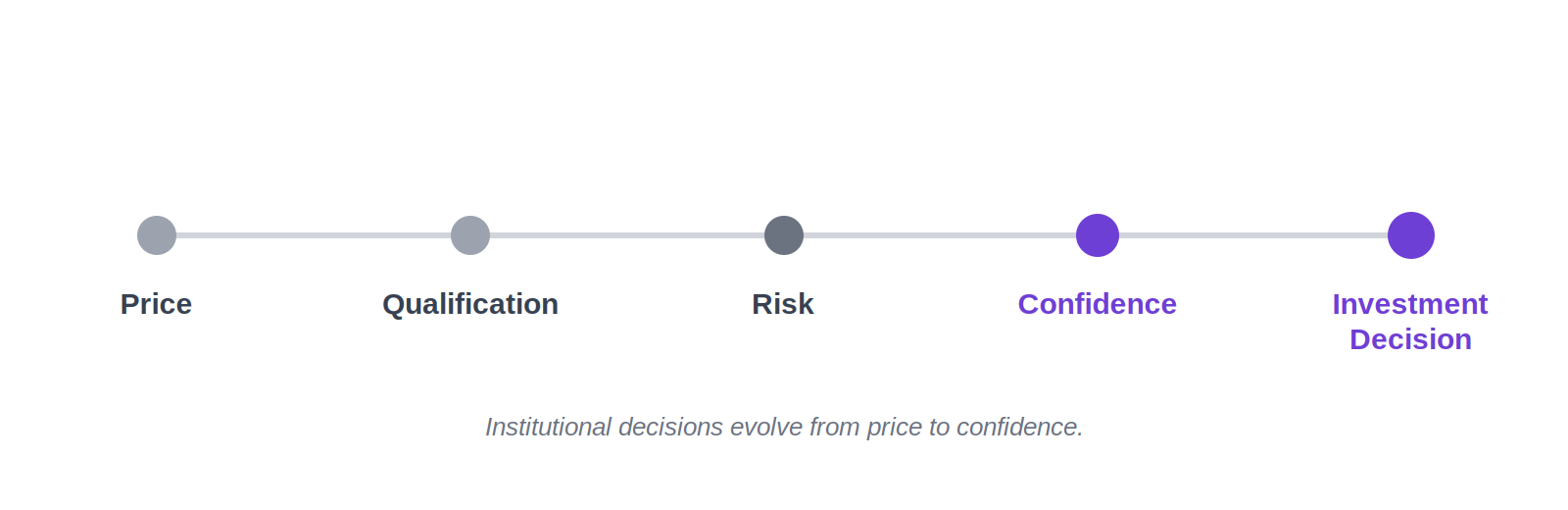
Ask someone outside this industry what happens in a transferable tax credit transaction, and they'll probably say a company buys a tax credit. Technically, that's correct. But it's not what institutional buyers believe they're purchasing. They're buying confidence: that the project qualifies, that its assumptions hold up, that the documentation tells one consistent story, and that the position still stands if questions arise years later. That's why experienced buyers often reach different conclusions than less experienced ones reviewing the exact same project. They aren't reading different documents. They're reading risk differently.
Price Gets the Headlines, Confidence Closes the Deal
Every market has the number everyone talks about. In transferable tax credits, it's price, whether a credit trades at 88 cents or 91 cents or 95 cents on the dollar. Pricing matters, and it's usually where a conversation starts. But once a transaction moves into due diligence, the question changes. The buyer stops asking how much this costs and starts asking what they could be missing. That shift is what actually determines whether a deal closes quickly or drags on for months.
Every Document Is Answering a Different Question
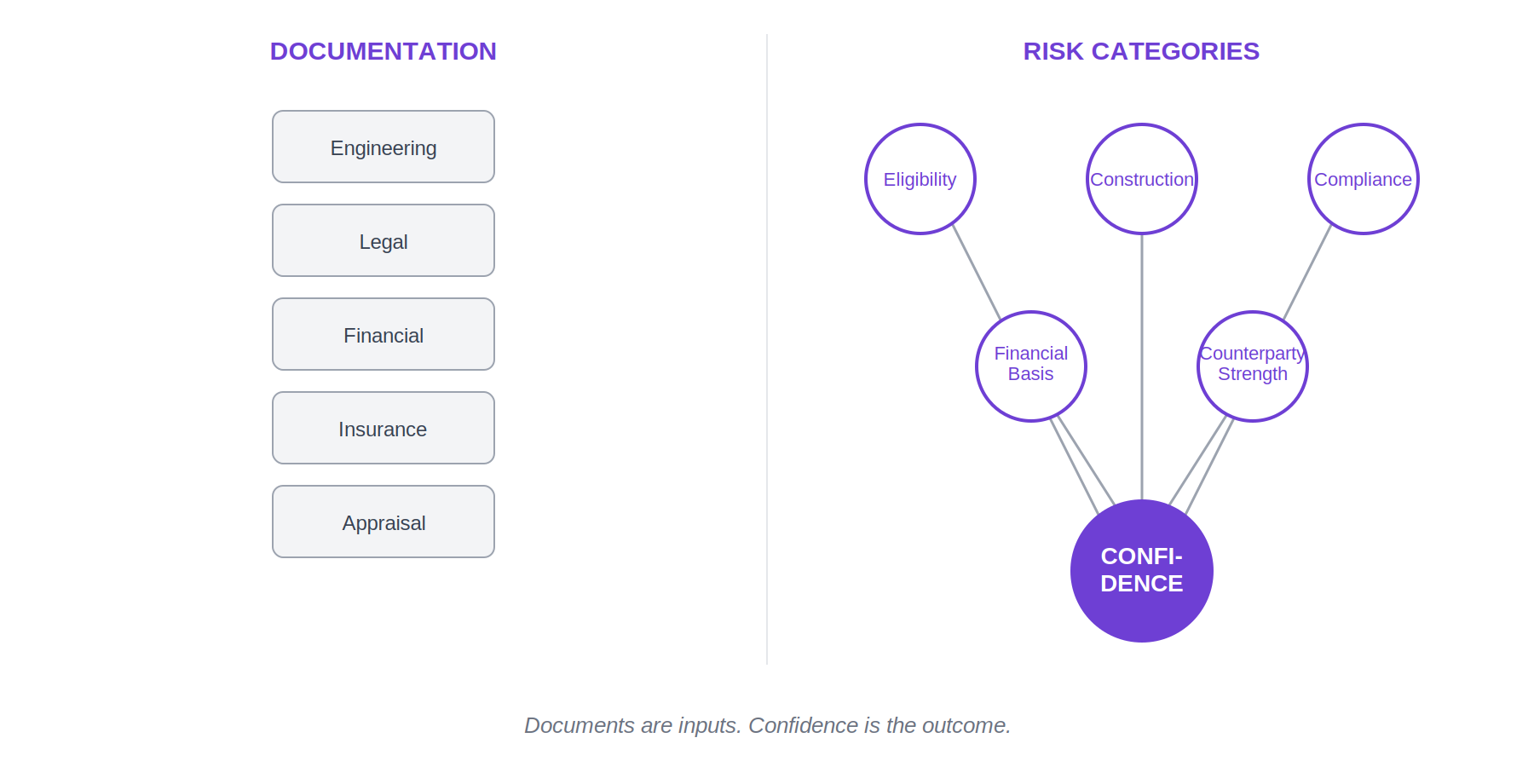
Buyers don't review documents because they enjoy reading reports. Each one is answering something specific. An engineering report is answering whether the project can perform as described. A tax opinion is answering whether the legal position holds up. An appraisal is answering whether the valuation is reasonable. Financial statements are answering whether the sponsor can stand behind its obligations. Individually, each document matters. Collectively, they're answering one larger question: can this transaction actually be trusted? That's why sophisticated buyers don't see a stack of documents, they see evidence.
Sophisticated Buyers Think in Risks, Not Documents
Less experienced buyers tend to review a project document by document, checking items off a list. Experienced buyers review a project risk by risk, naturally grouping information into categories like eligibility, construction, tax basis, compliance, counterparty strength, insurance, and future audit exposure. Instead of asking whether they have everything, they ask what assumptions a given conclusion actually depends on. It's a subtle difference in approach, but it changes how a decision actually gets made, and it's usually the clearest signal of how experienced a buyer really is.
Better Questions, Not More Questions
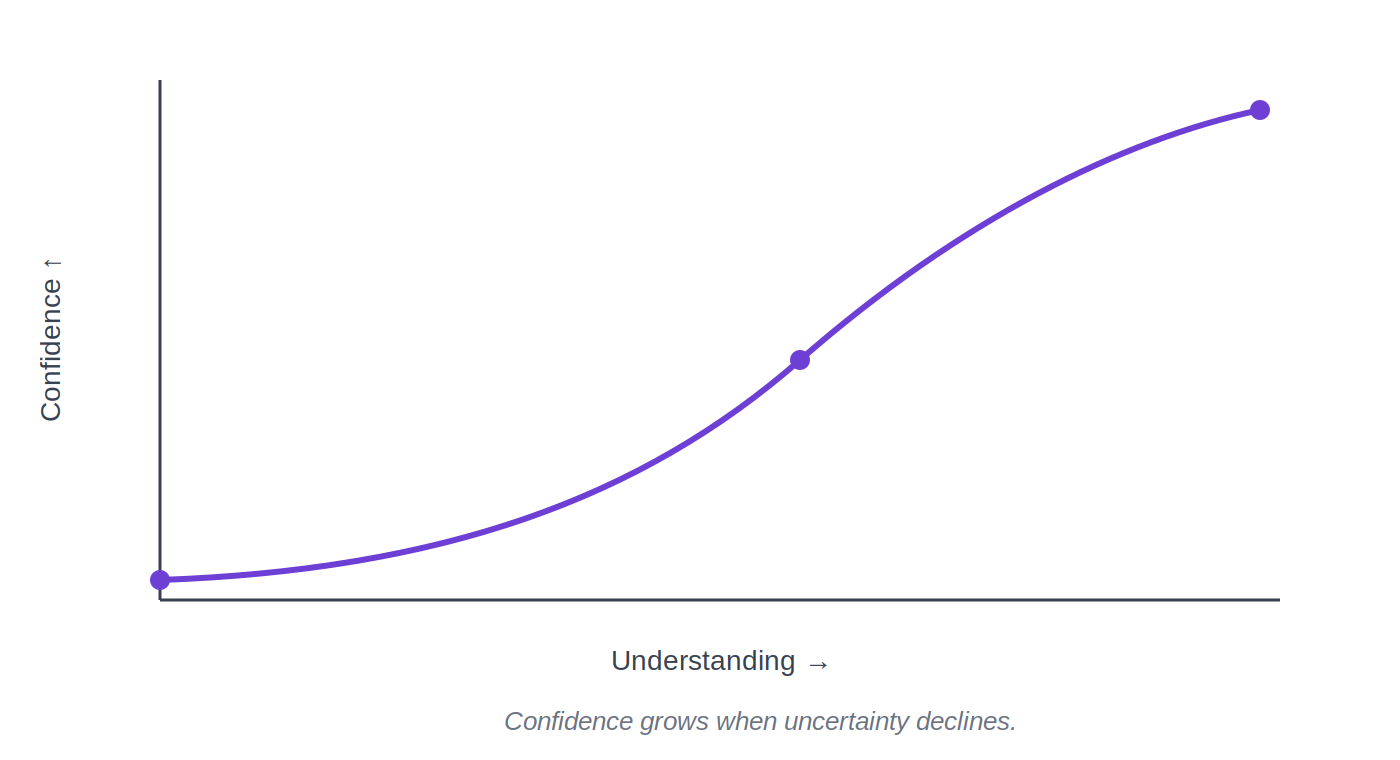
What separates experienced buyers from everyone else isn't the volume of questions they ask, it's the quality. Their questions reduce uncertainty, test assumptions, and reveal dependencies that a document-by-document review would miss entirely. Over time, this becomes a repeatable way of thinking, where each transaction makes the next one slightly easier because prior experience directly informs the next decision. Confidence compounds the same way expertise does.
Markets Mature Through Standardization, Not Just Capital
Early markets tend to run on individual expertise. Mature markets run on repeatable processes, and that's what actually allows institutional capital to scale into a space. This isn't about experts becoming less important, it's about expertise becoming easier to apply consistently across a growing number of transactions. The transferable tax credit market is moving through exactly that transition right now, and the organizations that make high-quality decisions consistently, not just occasionally, are the ones positioned to benefit most as it matures.
Where This Leaves the Market Going Forward
As this market keeps growing, buyer expectations will keep evolving with it. Projects won't compete on economics alone, they'll compete on how easy they are to believe in. Developers who understand this will prepare their projects differently from the start. Advisors will structure diligence differently. Buyers will make decisions faster, not because the underlying standards have gotten lower, but because the information supporting those decisions has gotten easier to trust.
The Vericap Perspective
The best buyers don't simply collect information; they build confidence. That distinction matters more every year as transferable tax credits mature into a genuine institutional asset class. We believe the future belongs to projects that make confidence easier to build, not by cutting corners on diligence, but by making diligence itself more efficient. Markets grow through capital. They mature through trust.
The projects that attract the most capital won't necessarily be the cheapest. They'll be the easiest to believe in.
So Far, on Vericap Insider
- Issue 004 - AI Isn't Replacing Due Diligence
AI is removing repetitive tasks that prevent experts from doing their best work. - Issue 003 - The Data Room Was Never the Point
More paperwork doesn't win a transferable tax credit deal; understanding does. - Issue 002 - Inside a $50 Million Tax Credit Transaction: What Happens Between the NDA and the Closing Table
Pricing starts the conversation. Confidence closes it. - Issue 001 - Why the Transferable Tax Credit Market's Biggest Problem is No Longer Finding Buyers
The next challenge isn't finding buyers. It's building trust.